General information, not legal advice.
Receiving a letter about software licensing can be unsettling, particularly if it arrives unexpectedly or names software that nobody in the organisation remembers buying. The most useful first step is to understand what the letter is — and what it is not. This article explains the purpose of a licensing notice, what it typically contains, and how organisations usually respond.
What a licensing notice is
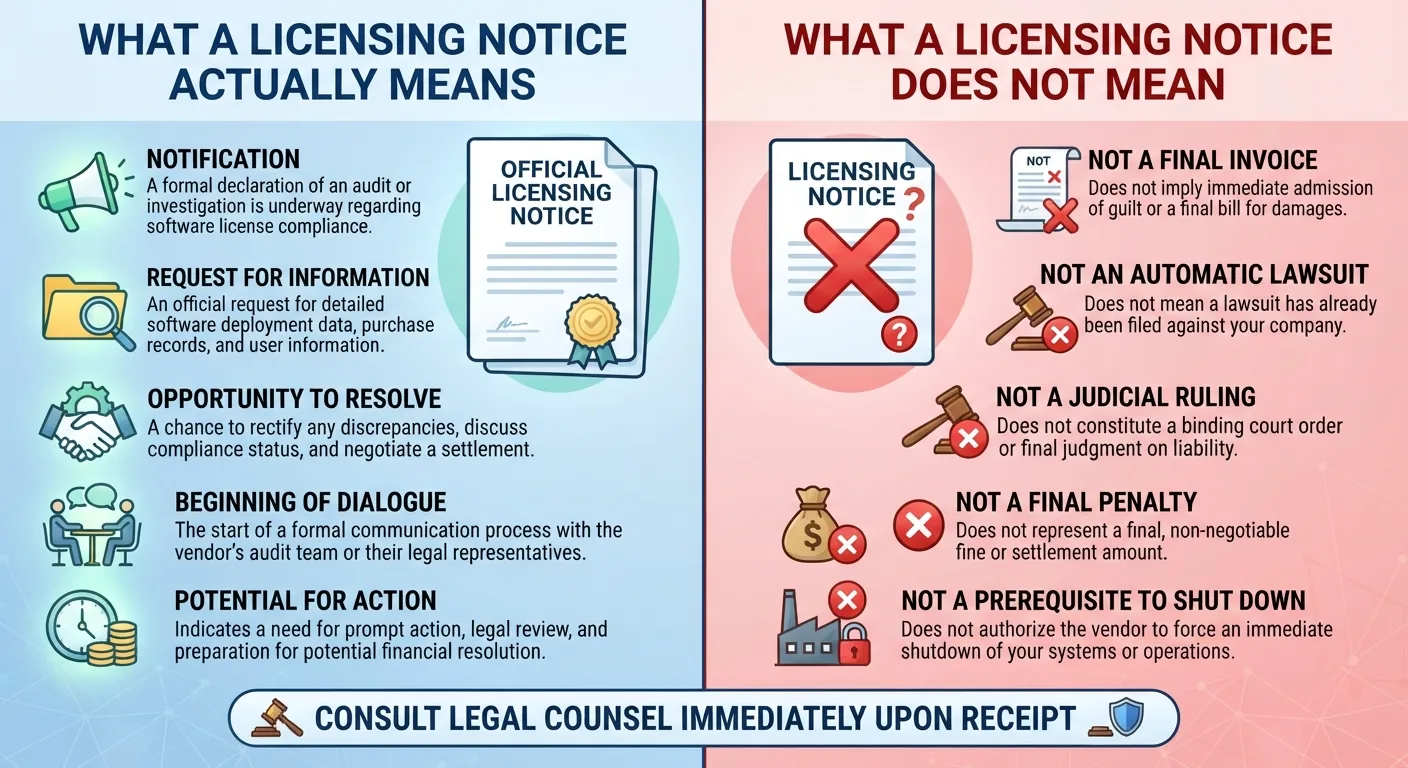
A licensing notice is a written communication sent on behalf of a software vendor. It states that the vendor has information suggesting its software may be in use at your organisation without a matching licence, and it invites you to look into the matter and respond.
In other words, it opens a conversation. It sets out what has been found, gives you a reasonable period to check your own records, and explains how to get in touch. Most notices also propose a route to resolve the matter commercially — usually by putting the correct licences in place.
What a licensing notice is not
It is worth being clear about what a notice does not mean:
- It is not a court order. No court has made any decision. A notice is a letter between parties, not a judgment or a claim form.
- It is not a finding of deliberate wrongdoing. Licensing gaps are very often accidental: a trial version that was never converted, a licence count that did not keep up with headcount growth, or software installed by a contractor who has since left.
- It does not require you to accept anything. You can ask questions, provide information and dispute the findings. Responding does not amount to an admission.
- It is not a request to pay into a personal account. A genuine notice will never ask for payment by gift card, cryptocurrency or transfer to a private individual. If you see anything like that, treat the letter with suspicion and verify it independently.
What a notice usually contains
While the format varies between organisations, a well-prepared notice normally includes:
- A unique reference number, so that every message about the case can be matched to it.
- The software concerned, identified by product and, where relevant, version.
- A summary of the findings — for example, the number of installations or users identified, and the period concerned.
- A deadline for a response, typically around 14 days, which is generally a request to make contact rather than to resolve everything within that time.
- Contact details for the team handling the case, and an explanation of how to send information.
If any of these elements is missing or unclear, it is entirely reasonable to ask for clarification before doing anything else.
How to respond calmly
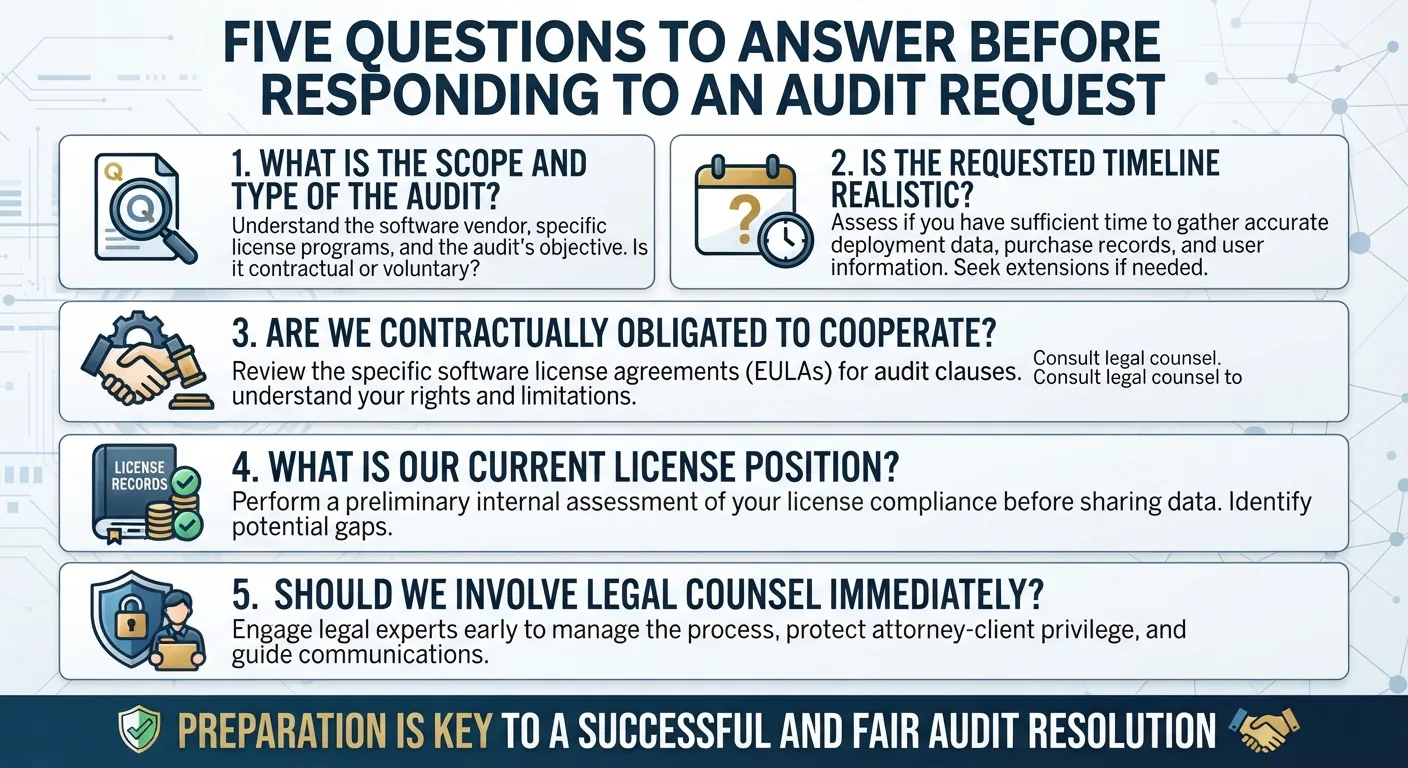
A measured response is almost always the quickest way to close a case. In our experience, the following steps work well:
Check that the notice is genuine. Confirm that it quotes a reference number, comes from the domain of the company named in the letter, and does not ask for unusual payment methods. If in doubt, call the sender using a telephone number you have found independently.
Collect your records. Look for invoices, licence certificates, licence keys, reseller agreements and subscription records for the software named. Your IT, finance and purchasing teams usually hold different pieces of this puzzle.
Check actual use. Compare what you have bought with what is installed and in use. Software asset management tools can help, but a careful manual check of the relevant systems is often enough for a single product.
Make contact before the deadline. Even if you have not finished checking, a short email acknowledging the notice and explaining what you are doing is helpful. Most case teams will agree a reasonable extension if you need more time.
Keep communication in writing. Email gives both sides a clear record. Quote the reference number in every message.
What happens next
If you already hold the right licences, sending proof is normally enough to close the case. Where there is a genuine gap, the usual outcome is a commercial resolution: the organisation purchases the licences it needs, and the agreement is confirmed in writing. The vast majority of matters end this way, without anyone going near a courtroom.
Only where a matter cannot be resolved — for example, because there is no response at all — might the vendor consider referring it to solicitors. Even then, the solicitors would contact you before taking any further step, and you would still be able to respond.
The bottom line
A licensing notice is an invitation to check the facts and talk. Treat it seriously, verify that it is genuine, gather your records and get in touch. Most cases turn out to be straightforward, and many are closed within days once the right information has been exchanged.
If you have received a notice from us, our guide for recipients explains each step in detail.